info@radisunenergy.in
 +91-7860950013
On Grid Solar System
It seems like you're referring to "On-Grid Solar System." An on-grid solar system, also known as a grid-tied or grid-connected system, is a solar power generation system that is connected to the utility grid. Here's a brief explanation:
Definition:An on-grid solar system is designed to work in conjunction with the local utility grid. It allows solar-generated electricity to be used on-site while also allowing excess electricity to be fed back into the grid.
How it Works:- During sunny periods, the solar panels generate electricity.
- The generated electricity is used to power the electrical appliances or equipment in the property.
- If the solar system produces more electricity than needed, the excess is fed back into the grid.
- During periods of low solar production (e.g., at night or on cloudy days), electricity is drawn from the grid.
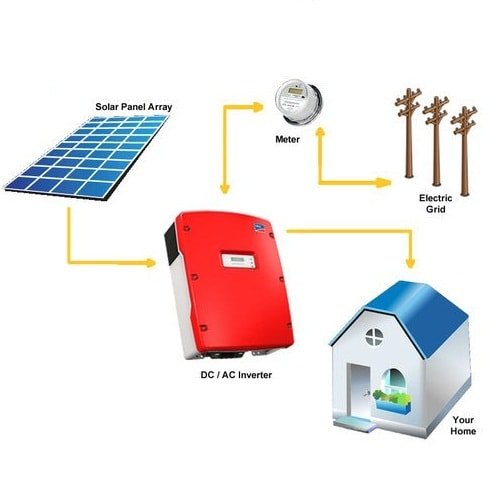
Components:
- Solar Panels: Convert sunlight into electricity.
- Inverter: Converts direct current (DC) generated by solar panels into alternating current (AC) used in homes and businesses.
- Metering System: Tracks the amount of electricity consumed and the excess electricity fed back into the grid.
- Cost Savings: Reduces electricity bills by using solar power during the day and feeding excess power back into the grid.
- Environmentally Friendly: Reduces reliance on traditional energy sources, lowering carbon footprint.
- Grid Support: Can support the grid by supplying excess electricity during peak demand.
- Grid Dependency: The system relies on the grid for electricity during non-sunny periods.
- Net Metering: Many on-grid systems use net metering, where users are credited for excess electricity fed back into the grid.
Copyright © 2024. Radisun-solar All Right Reserved. And Designed & Developed By websitesolutionindia.com