info@radisunenergy.in
 +91-7860950013
Solar Water Heater
A solar water heater is a device that utilizes sunlight to heat water for various domestic, commercial, or industrial purposes. The primary goal of a solar water heater is to harness the energy from the sun and use it to heat water, reducing the need for electricity or gas for this purpose. Here are the key components and features of a typical solar water heating system:
Solar Collectors:These are the devices that capture sunlight and convert it into heat. The most common types of solar collectors for water heaters are flat-plate collectors and evacuated tube collectors.
Heat Transfer System:Once the solar collectors absorb sunlight, they transfer the collected heat to a fluid, often a heat transfer fluid like antifreeze. This fluid circulates through the collectors and carries the heat to the water storage tank.
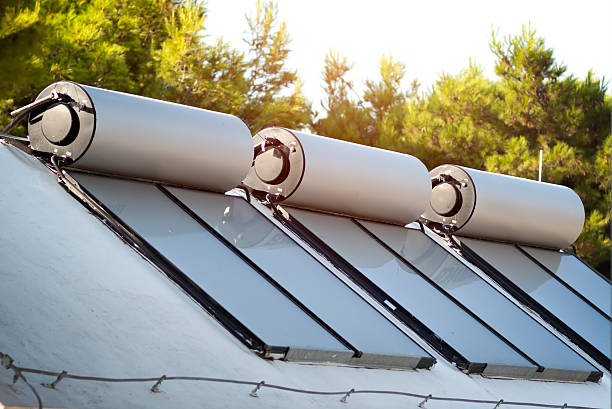
The heated fluid then passes through a heat exchanger within a water storage tank. This heat exchanger transfers the heat from the fluid to the water stored in the tank, raising its temperature.
Circulation Pump:In active solar water heating systems, a circulation pump is used to move the heat transfer fluid between the collectors and the water storage tank. This ensures a continuous flow of heated fluid.
Controller:A controller is often included in the system to monitor and regulate the temperature of the water. It can turn the circulation pump on or off based on the temperature requirements.
Backup Heating Element:Some solar water heaters have a backup heating element (electric or gas) to provide additional heating during periods of low sunlight or high water demand.
How Solar Water Heaters Work:- Sunlight is absorbed by the solar collectors, heating the transfer fluid within them.
- The heated fluid is circulated to the water storage tank, transferring its heat to the water.
- The water in the storage tank is heated and can be used for various applications such as bathing, cleaning, or space heating.
- Active Solar Water Heaters: Use pumps to circulate the heat transfer fluid between the collectors and the storage tank.
- Passive Solar Water Heaters: Rely on natural convection to circulate the fluid or may use a thermosiphon system where warm water rises and cold water sinks.
- Energy Cost Savings: By utilizing sunlight, solar water heaters can significantly reduce the need for electricity or gas to heat water.
- Environmentally Friendly: Solar water heaters contribute to a reduction in greenhouse gas emissions and reliance on non-renewable energy sources.
- Long-Term Savings: While the initial investment can be higher, solar water heaters often provide long-term cost savings due to reduced energy bills.